22.8 C
Thrissur
Sunday, December 7, 2025
Home Blog Page 9

Kalluvazhi T P Rama Pisharody

0

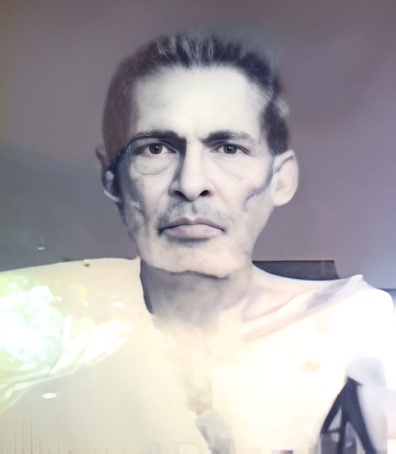
Kalluvazhi T.P. Rama Pisharody – A Pillar of Kathakali Tradition

Long before Kathakali attained its internationally acclaimed status, the art form was carefully nurtured and popularized by a humble yet immensely talented Kathakali singer — Kalluvazhi Thrivikramapurath Rama Pisharody, affectionately known as Kunju Pisharody.

When the renowned Ayurvedacharya P.S. Varier founded the P.S.V. Natyasangham with the aim of promoting Kathakali, the responsibility of managing and guiding the institution was entrusted to Rama Pisharody. Under his stewardship, a vibrant and youthful Kathakali troupe came into being.

A true polymath in the world of Kathakali, Rama Pisharody mastered several aspects of the art beyond singing — including Chenda, Maddalam, make-up, and more. He was a mentor and guide to numerous illustrious disciples, including Kottakkal Krishnankutty Nair, Kalluvazhi Vasu, Vasu Nedungadi, and Kuttan Marar. Many consider him the “Guru’s Guru” — a foundational figure for generations of artists who followed.

He was trained under Kalluvazhi Govinda Pisharody, a legendary figure in his own right, alongside fellow disciple Vazhengada Kunj Nair. For music, he received guidance from Bhagavathar Kesavan Nair in Kathakali Sangeetham.

Born in 1892 to Thrivikramapurath Parukutty Pisharassiar and Kaplingat Manakkal Amrithan Namboodiripad, Rama Pisharody pursued his early education locally before dedicating himself fully to Kathakali under the guidance of his brother, Govinda Pisharody. He later married Vengasseri Kaavil Pisharath Parukutty Pisharassiar.

Described by Kottakkal Krishnankutty Nair — the former Principal of P.S.V. Natyasangham — as an “encyclopedia of Kathakali,” Rama Pisharody’s contributions continue to resonate in the Kathakali world.

In 1974, at the age of 82, this versatile Acharya of Kathakali passed away, leaving behind a legacy that has shaped the very fabric of the art form.
Kalluvazhi Govinda Pisharody

0

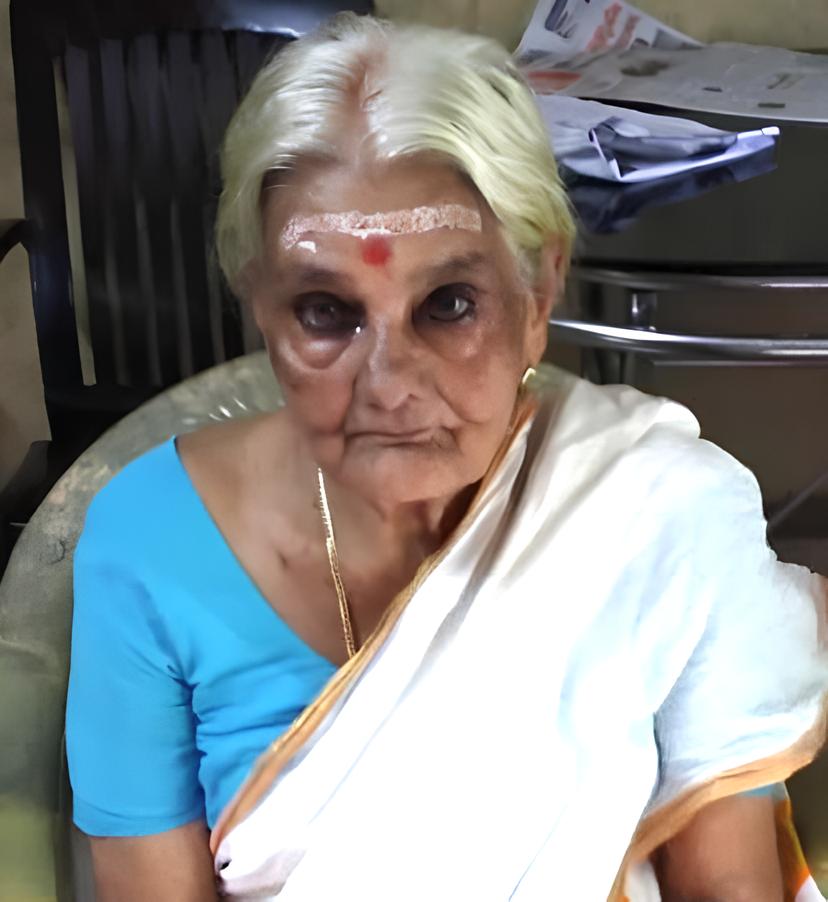
Kalluvazhi Govinda Pisharody was a renowned exponent of the Kathakali art form, known for both his traditional training and remarkable stage performances. He began learning Kathakali at the tender age of 10 and steadily rose through the ranks, initially performing child roles and eventually taking on lead roles by the age of 18.

He was a favourite of the esteemed Poomully and Mappaat Manas, who played a significant role in promoting traditional art forms and supported his artistic journey. Govinda Pisharody gained immense popularity for his portrayal of Bhima in Bhagavadham and Kalyanasougandhikam, and of Duryodhana in Uttaraswayamvaram.

In recognition of his talent, the famed art patron Mappad Purushottaman Namboodirippad gifted him a splendid crown and full Kathakali attire, which he proudly used in his performances.

Tragically, at the age of 36, Govinda Pisharody was afflicted with a serious and incurable eye ailment, which forced him to retire from stage performances at the peak of his career.

Despite this setback, he made a lasting contribution to Kathakali by dedicating himself to teaching. Among his distinguished disciples were Vazhengada Kunju Nair, Kottayathu Thamburan, and Thrivikramapurath Rama Pisharody, who themselves went on to become celebrated Kathakali artists.

Kallekkulangara Raghava Pisharody

0

Kallekkulangara Raghava Pisharody (1725–1795)

Kallekkulangara Raghava Pisharody, a revered scholar and poet of 18th-century Kerala, is best known for his celebrated Aattakatha “Ravanolbhavam”. Born in 1725, he resided at Andam Pisharam, near the sacred Kallekkulangara Bhagavathi Kshetram at Akathara in Palakkad.

Pisharody received his early education under the tutelage of his elder brother and guru, Krishna Pisharody. Eventually, he established his own school, where he mentored many distinguished disciples, including the renowned Kudiyamkulathu Shuppu Menon. In recognition of his erudition and influence, locals affectionately referred to him as “Manaloor Ezhuthachchan”.

A polymath, Raghava Pisharody served as a court scholar to Ittikombiyachchan, the ruler of Palakkad. With his profound knowledge in astronomy and architecture, he was entrusted with identifying a suitable location for a fort — a task that led to the establishment of the present-day Palakkad Fort.

However, following the succession of Ittipongiyachchan, Pisharody was compelled to seek asylum in the kingdom of Kochi under Veerakerala Varma. It was during this period of exile in Thrippunithura that he is believed to have composed his magnum opus, Ravanolbhavam.

Apart from this renowned work, Raghava Pisharody authored several other literary masterpieces, including:

  • Sethu Mahatmyam
  • Vethaalacharitham
  • Panchathantram

The legacy of Kallekkulangara Raghava Pisharody lives on through his timeless contributions to Malayalam literature, as acknowledged by historian Ulloor S. Parameswara Iyer in Kerala Sahitya Charitham.

Anayath Krishna Pisharody

0

Anayath Krishna Pisharody of Thiruvegappura was a renowned Sanskrit scholar, historically recognized as the guru (teacher) of Manavedan Raja, the Zamorin (Samoothiri) of Kozhikode. Manavedan Raja is celebrated for conceiving Krishnanattam, the classical Sanskrit dance-drama based on the poetic work Krishnageethi.

The esteemed Malayalam poet and historian Mahakavi Ulloor S. Parameswara Iyer references this scholarly relationship in Kerala Sahithya Charithram (Chapter 33). Furthermore, Manavedan Raja himself acknowledges his guru, Anayath Krishna Pisharody, in his literary work Poorvabharatha Champu. A notable commentary on this text, titled Krishneeyam, is traditionally attributed to Anayath Krishna Pisharody, further establishing his deep influence on both literature and the performing arts of Kerala.

Anayath Karunakara Pisharody

0

Anayath Karunakara Pisharody was indeed a distinguished Sanskrit scholar, traditionally regarded as a prominent figure in the literary and scholarly circles of Kerala. He is best known as the guru (teacher) of Manavikrama Maharaja, a member of the Zamorin dynasty of Calicut, who authored the celebrated Sanskrit work “Kavi Chinthamani.”

  • Era: Believed to have lived during the same period as Uddanda Shastri, placing him roughly in the 15th to 16th century CE, though exact dates are uncertain.
  • Notability:
    • Renowned for his scholarship in Sanskrit literature and grammar.
    • Teacher of Manavikrama Maharaja, the author of “Kavi Chinthamani,” a well-known treatise on Sanskrit poetics and literary aesthetics.
    • He is part of the rich tradition of Kerala Brahmin scholars, particularly those from the Pisharody community, known for their contributions to Sanskrit education and temple learning.

Historical Context:

  • Uddanda Shastri was a Tamil and Sanskrit scholar known for his work “Kokila Sandeśa,” and he visited Kerala during the Zamorin reign. Since both Uddanda Shastri and Anayath Pisharody are associated with the Zamorin court, it’s plausible that they were contemporaries or near-contemporaries.
  • The Zamorins of Calicut (especially Manavikrama Raja) were notable patrons of arts and literature, and their courts attracted scholars from across South India.

Legacy:

While not as widely known in mainstream Indian literary history, Anayath Karunakara Pisharody’s influence continues through works like “Kavi Chinthamani,” which he indirectly shaped through his discipleship. His life is celebrated in the intellectual traditions of Kerala, particularly among scholars of Sanskrit and Kerala history.

Anayath Pankajaksha Pisharody

0

Anayath Pisharath Pankajaksha Pisharody is also mentioned a Sanskrit Scholar and Guru of Manavikraman Raja and supposed to be nephew of Karunakara Pisharody. His famous work is “Hridayagrahini”.

Thrikkandiyur Achutha Pisharody

0

🌟 Thrikkandiyur Achutha Pisharody (1545–1621)

  • A brilliant astronomer, grammarian, and Ayurvedic scholar from Kerala during the 16th–17th centuries.
  • Preceptor (guru) to Melpathur Narayana Bhattathiri, the celebrated author of Narayaneeyam.
  • Contemporary of Thunjath Ezuthachan, the father of the Malayalam language.

📚 His Major Works

On Astronomy & Mathematics

  1. Karaṇottama (1593) —
    • Five chapters, ~100 verses.
    • Discusses computation of mean and true longitudes of planets, eclipses, and solar-lunar conjunctions (vyatūpātas).
    • A self-commentary exists.
  2. Uparāgakriyākrama —
    • Four-chapter treatise specifically on solar and lunar eclipses.
    • Completed in 1593, placing it firmly in the late 16th century.
  3. Sphuṭanirṇaya —
    • Six chapters, focuses on astronomical calculations.
  4. Rāśigolasphuṭānūti —
    • 50 verses explaining the reduction of the Moon’s longitude to the ecliptic—a sophisticated step in positional astronomy.
    • References both Sphuṭanirṇaya and Uparāgakriyākrama, proving it was written later than 1593.
  5. Chāyāṣṭaka —
    • Eight concise verses on astronomical phenomena.
  6. Uparāgaviṃśati —
    • Twenty-verse manual on eclipses, with Malayalam commentary.
  7. Veṇvārohavyākhyā —
    • Commentary in Malayalam on Veṇvāroha by Mādhava of Sañgamāgrama, dealing with tithis and nakṣatras.

On Sanskrit Grammar

  1. Praveśaka (Pravesakam) —
    • Introductory Sanskrit grammar text (~600 anuṣṭubh stanzas).
    • Written to teach his student Melpathur.
    • Remains an important primer in Kerala’s Sanskrit tradition.

On Astrology

  1. Horāsāroccaya —
    • Seven chapters adapting Srūpati’s Jātakapaddhati.
    • Explores horoscopy (jātaka) and predictive techniques.

🔭 Scientific Contributions

  • Pisharody’s works include detailed computations for eclipses, planetary motions, and innovations like techniques for the reduction of the ecliptic, which are crucial steps for accurate astronomical predictions.
  • His treatises demonstrate a high level of mathematical sophistication and a deep understanding of spherical astronomy.

🏆 Significance

  • He is a vital link in Kerala’s rich tradition of mathematical astronomy, which includes luminaries like Mādhava of Sangamagrama.
  • His clear expositions and systematic works helped standardize astronomical practices in Kerala for generations.
  • His grammatical text Praveśaka continued Kerala’s strong Sanskrit scholarship, bridging astronomy, astrology, and linguistics.
  • The exact relationship between this work and the Horātantraṃ Parijbhāṣa, a Malayalam commentary on Jātakapaddhati, remains uncertain.

Further discussion of Acyuta Piṣāraṭi may be found in S. Venkitasubramonia Iyer, “Acyuta Piṣāroṭi; His Date and Works,” in JOR Madras, 22 (1952–1953), 40–46; and K. Kunjunni Raja, The Contribution of Kerala ot Sanskrit Literature (Madras, 1958), pp. 122–125, and “Astronomy and Mathematics in Kerala,” in Brahmavidyā, 27 (1963), 158–162.

Thrikkandiyur Govinda Pisharody

0

Thrikkandiyur Govinda Pisharody was also a great grammarian lived before Achutha Pisharody.

Thrikkandiyur Nanappa Pisharody

0

Nanappa Pisharody of Thrikkandiyoor Pisharam was a great grammarian lived in 15th Century and believed to be uncle of Great astronomer Thrikkandiyur Achutha Pisharody.

Ayyankuzhi Poothrikka Pisharath Ammini Pisharasiar

0