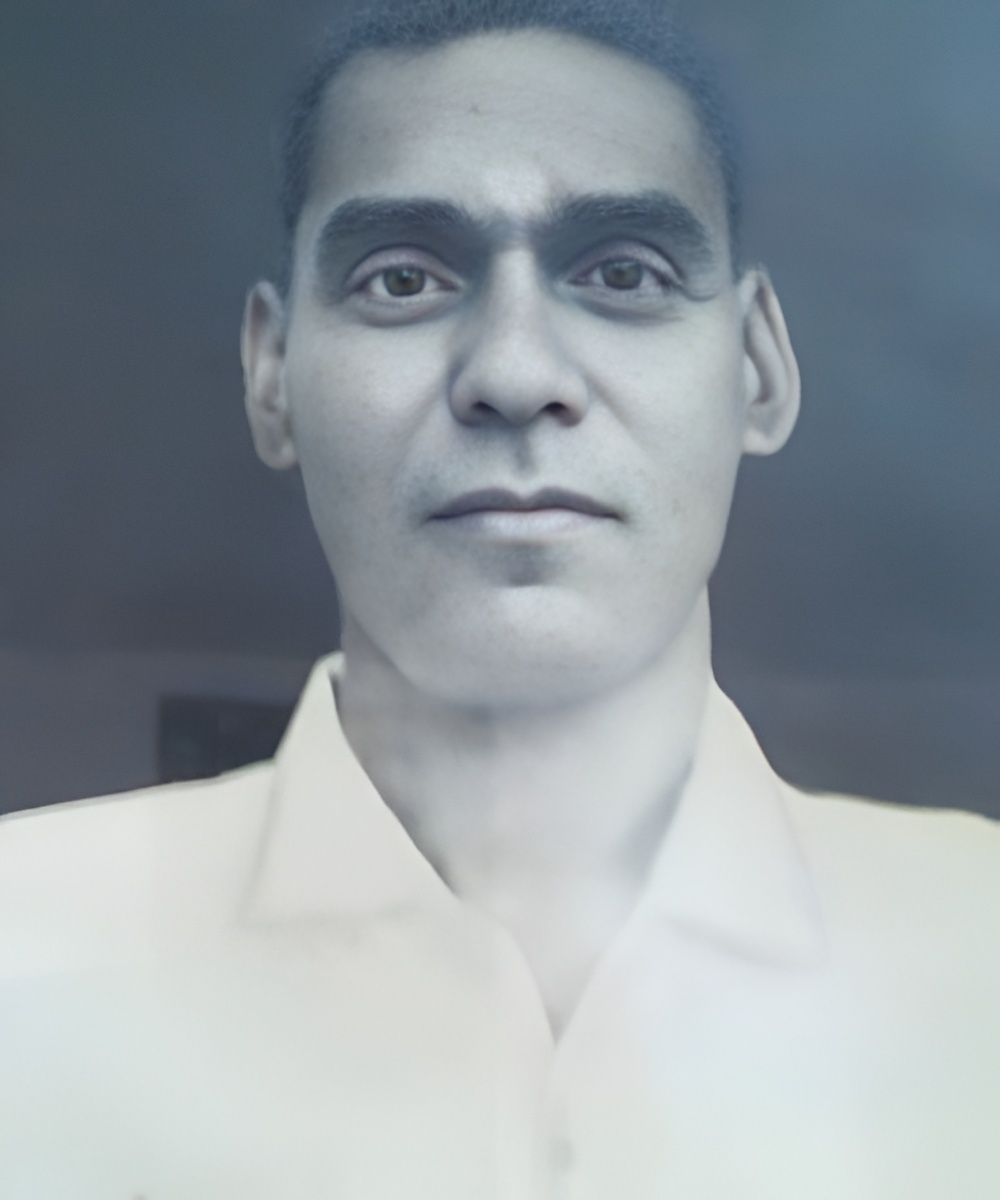
Prof. D. Damodara Pisharody, a luminary in the field of Sanskrit grammar and Hindu philosophy, was born in 1918 to Nayathode Pisharath Lakshmikutty Pisharassiar and Thanippilly Manakkal Parameshwaran Namboodiri.
After completing his primary education and successfully passing the Panchamam examination from the Sreemulanagaram Sanskrit School, he pursued higher studies in Sanskrit at the prestigious Thripponithura Sanskrit College. There, he became a devoted disciple of renowned scholars Perunthanam Narayanan Namboodiri and Shankaranarayana Shastrikal, acquiring deep knowledge in Sanskrit grammar, Hindu philosophy, and Mīmāṁsā (analytical study of Vedic texts). His understanding of Tarka Shastra (logic and reasoning in Vedic thought) was further enriched under the tutelage of Rama Varma Parikshit Thampuran, the ruler of the erstwhile Cochin Province.
Prof. Pisharody’s academic career included distinguished tenures as a professor at both Kaladi Ashramam School and Thripponithura Sanskrit College. Among his many notable students were Thanthrika Kulapathy Vezhaparambu Narayanan Namboodiri and Dr. K.G. Paulose, former Registrar of Kalady Sanskrit University.
In recognition of his vast contributions to Sanskrit scholarship, he was conferred the title Shastra Ratna in 1967 by the Pattambi Neelakantha Sanskrit Vidyapeeth. He also received the Panditharaja award from Thrippunithura Sanskrit College and was honored with the Keerthi Mudra by the Shankaracharya Swamikal at the Sringeri Sannidhanam Vidwatsadas.
Although he officially retired in 1974, Prof. Pisharody continued to share his profound knowledge for several more years at the Pavaratty Sanskrit School.
His scholarly contributions include critical interpretations and publications such as:
- Seetavicharalahari by N.N. Gopala Pillai
- Vyakaranaarthamala by Perunthanam Narayanan Namboodiri
- Vishnubhajanga Stotram
- Samskritadhyapakabandhu
This prolific scholar and humble soul passed away in July 1984 at his residence, Narayanalayam, leaving behind a rich legacy of Sanskrit learning and tradition.